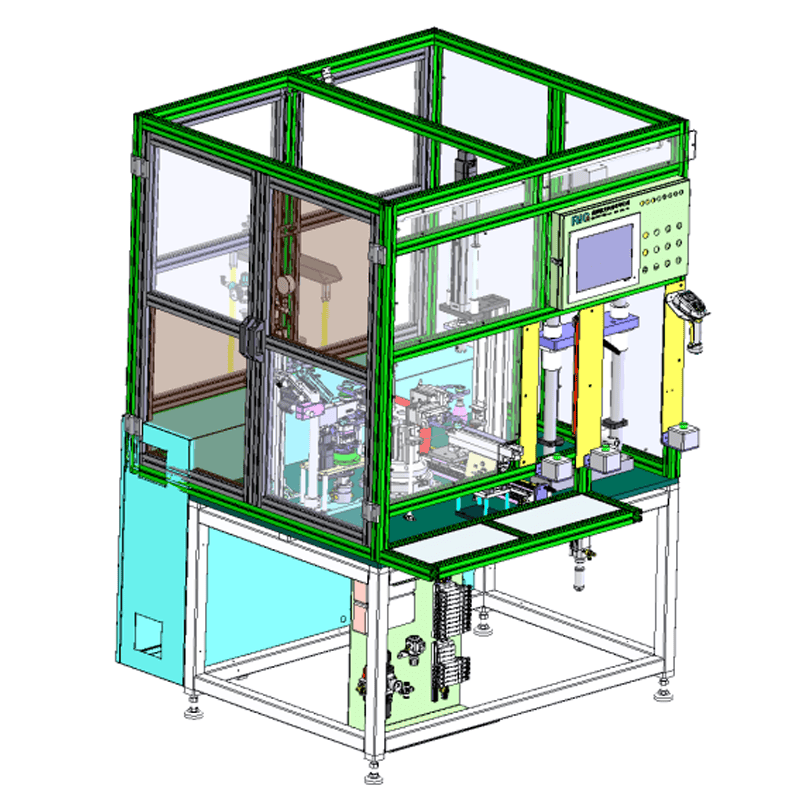
RIG Technology Enhances Automotive Component Assembly with Fully Automated Production Line
Introduction:
In the automotive manufacturing industry, precision, efficiency, and reliability are paramount to ensuring high-quality components. Chengdu RIG Technology Co., Ltd. (RIG) has been at the forefront of providing innovative automation solutions for automotive assembly, offering custom-built systems that streamline production processes and enhance overall operational performance. This case study explores RIG’s successful deployment of a fully automated assembly line for automotive subframe bushing production, showcasing its precision, flexibility, and efficiency.
Project Overview:
RIG Technology designed and implemented an automated production line specifically for the assembly of ball joints and connectors in suspension systems. The system integrates multiple functions, including oil injection, assembly, pressing, and torque testing, enabling seamless, high-speed operations that ensure consistently high-quality output. The project aimed to reduce manual labor, improve production speed, and maintain strict quality control in an increasingly competitive automotive market.
Key Features and Technological Innovations:
- Precision Oil Injection and Filling:
The assembly line includes a precision oil injection system capable of adjusting the oil dosage based on component specifications. This feature ensures that each ball joint or connector receives the exact amount of lubricant, contributing to longer component lifespan and enhanced performance. - Automatic Component Feeding:
The system automates the feeding of components, such as ball joints and connectors, reducing human intervention and increasing production efficiency. This automation ensures consistent placement and handling of parts, which is crucial for maintaining accuracy across large production volumes. - Servo-Driven Pressing System:
The production line integrates a servo-driven pressing mechanism to ensure precise application of pressure during component assembly. The pressing force is controlled with high accuracy, improving the reliability and repeatability of each assembly operation. - Real-Time Quality Control with Torque Testing:
The system is equipped with real-time torque testing, where each component is tested for the correct torque and pressure. The automated inspection system ensures that parts meet strict quality requirements, and defective parts are immediately removed from the line, reducing waste and rework. - Laser Marking and Identification:
To improve traceability, the line includes a laser marking station that marks each component with a unique identification code, allowing easy tracking of production data and facilitating quality control.
Production Efficiency and Benefits:
By implementing this automated assembly line, the manufacturer has achieved significant improvements in operational efficiency:
- Increased Throughput: The automation of key processes such as oil injection, pressing, and torque testing has significantly reduced cycle times and increased production throughput.
- Consistency and Quality Assurance: With automated quality control systems, each part is tested and monitored, ensuring that all components meet rigorous performance standards before leaving the production line.
- Reduced Labor Costs: The automation of critical steps reduces the need for manual labor, cutting operational costs and allowing workers to focus on other essential tasks.
Technical Specifications:
| Parameter | Specification |
|---|---|
| Cycle Time | 12 seconds per unit |
| Oil Injection Precision | ±0.05g |
| Ball Pin Thread Detection | Visual Verification |
| Pressing Force | Max 5000N |
| Riveting Speed | 800 RPM |
| Torque Test Range | 0-15 N.m |
| Laser Marking | Yes |
| Real-time Monitoring | Yes (Full Traceability) |
Client Results and Impact:
The fully automated assembly line has greatly improved the manufacturer’s production process. Key outcomes include:
- Enhanced Production Speed: The automated system operates continuously with minimal downtime, achieving higher production volumes.
- Improved Product Quality: Automated testing, pressing, and marking ensure that each component meets strict quality standards.
- Increased Flexibility: The system’s design allows for easy adjustments, making it adaptable to different component sizes and production requirements.
Conclusion: A Game-Changer in Automotive Manufacturing
RIG Technology’s automated assembly line for automotive components represents a significant leap forward in automotive manufacturing automation. By integrating advanced sensors, servo-driven systems, and real-time monitoring, RIG has enabled manufacturers to meet the growing demands of precision and speed in the automotive industry. This case study highlights RIG’s commitment to providing customized solutions that improve production efficiency, reduce costs, and ensure product reliability across a wide range of industries.
RIG Technology Enhances Automotive Component Assembly with Fully Automated Production Line
RIG Technology’s fully automated assembly line provides automotive manufacturers with a high-efficiency solution for the assembly of suspension components. By automating key processes like oil injection, pressing, and torque testing, RIG enhances production speed, ensures product quality, and minimizes manual labor costs, helping manufacturers maintain competitive advantage in the automotive industry.
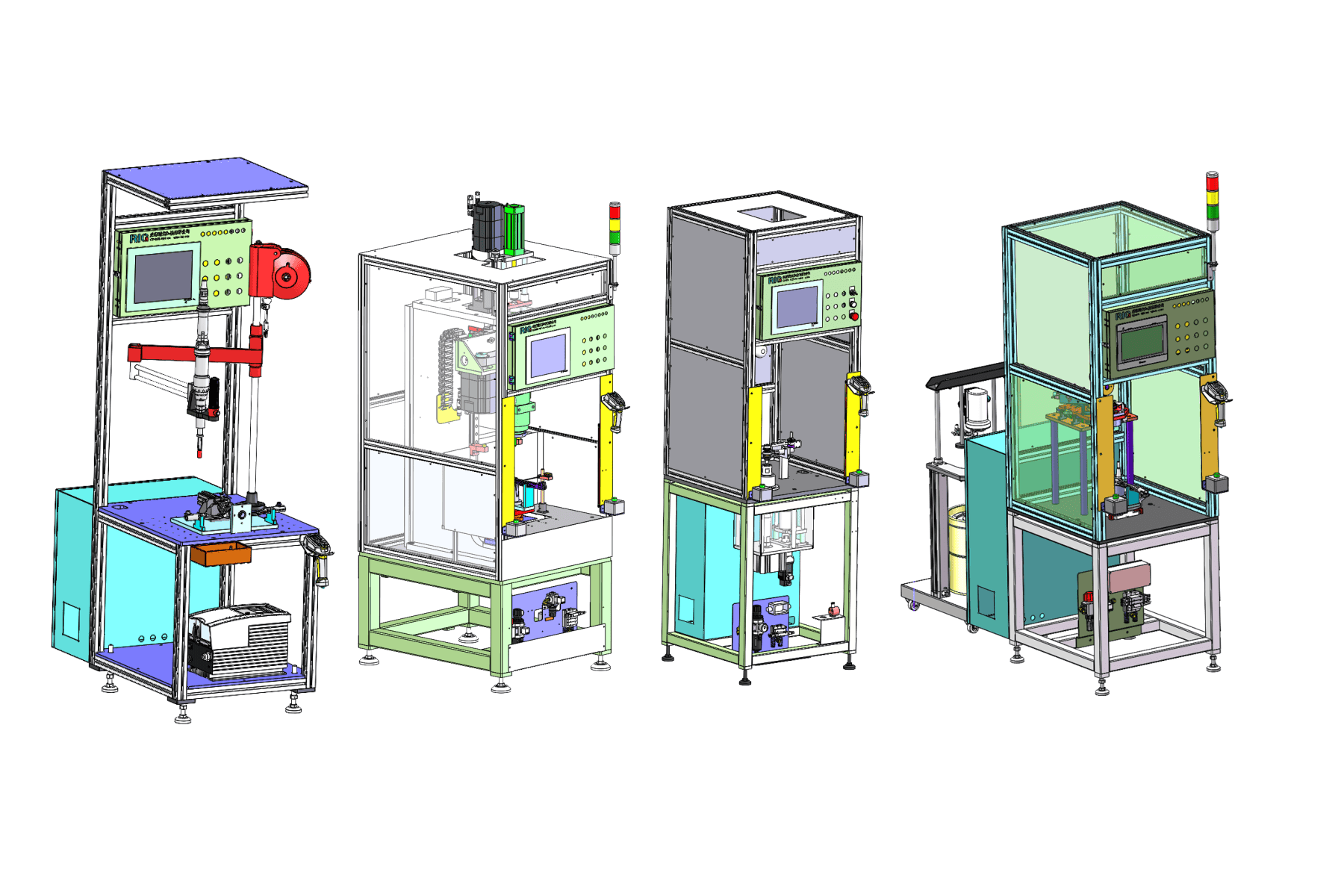
Performance Showcase of Our Machines